Kulkarni and Joshi
phosphorus, potassium and iron in the amount of 0.103,
et al ., 2005). Similar kinds of results are reported by
0.215, 0.84% and 92.66 ppm, respectively.
Dutta et al . 2005 and Suman et al. , 2002.
The results obtained are in good agreement with the
Effect of storage conditions on standard plate count
results reported by several other investigators for pumpkin
(SPC)
powder (Pogjanta et al. , 2006; Lee et al ., 2002).
The changes in standard plate count (cfu/g) of pumpkin
Effect of storage conditions on carotene degradation in
powder during storage are depicted in Fig 1. The SPC of
pumpkin powder
pumpkin powder showed a decreasing trend during entire
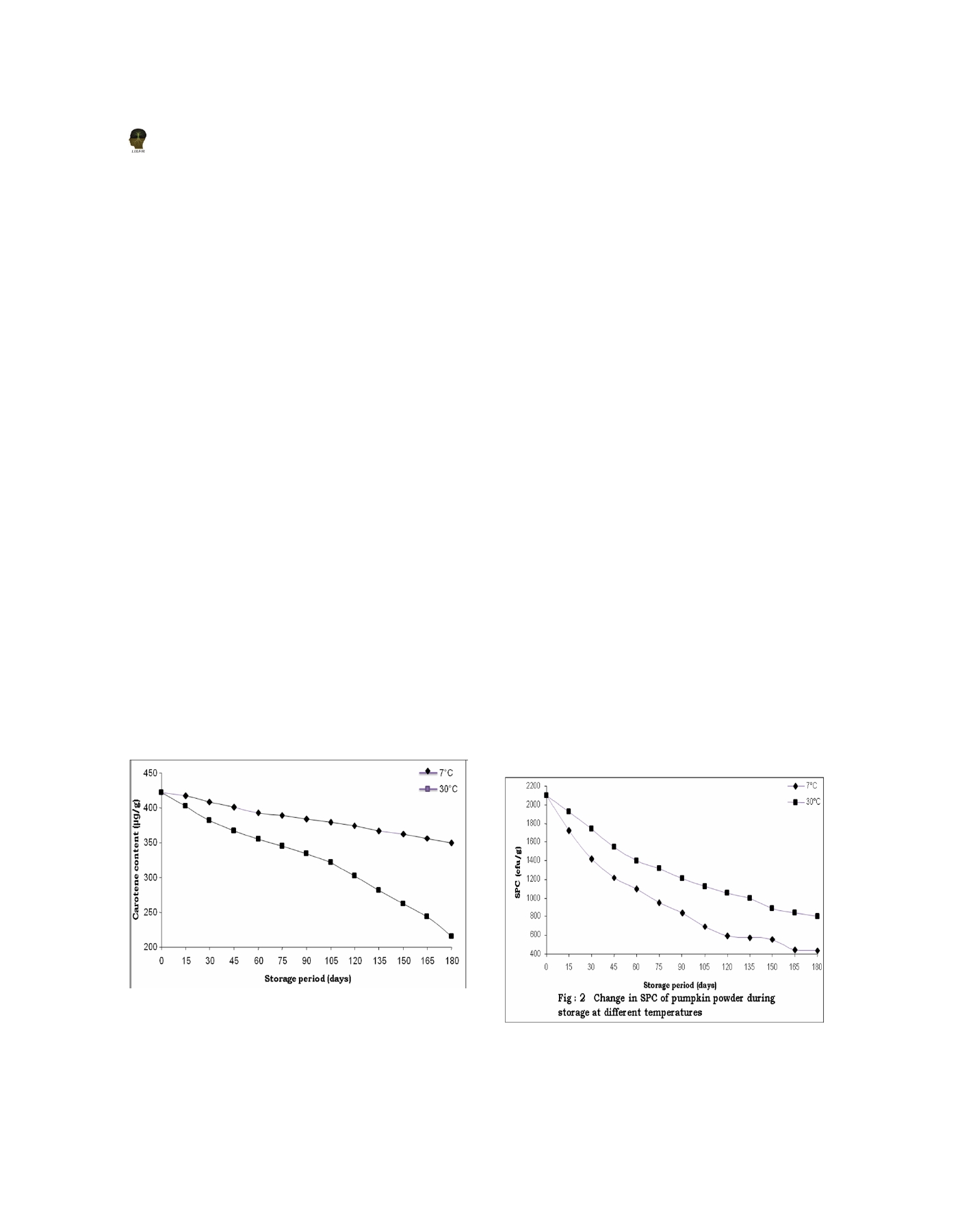
Fig.1 represents the data on variations in carotene content
course of storage at both the storage temperatures. At the
(μg/g) in pumpkin powder after 0, 15, 30, 45, , 180 days
end of storage period (180 days), the lowest SPC was
of storage both at 7°C and 30°C. As the period of storage
recorded for the samples stored at 7°C as compared to
was extended, the carotene content in powder reduced
those stored at 30°C. At 7°C, the initial count of 2100
for both the temperatures of storage. From the results
cfu/g was decreased to 440 cfu/g by the end of storage.
it was observed that at 7°C storage, the total reduction
However, at 30°C, the initial count of 2100 cfu/g was
in carotene content in the pumpkin powder was only
reduced to only 800 cfu/g at the end of storage of 180
17.04% from 422 μg/g (0 day) to 350.08 μg/g carotene at
days. It is evident from the results mentioned in Table
180 days. While at 30°C, the total reduction was 48.71%
2 that the water activity ( a w ) of pumpkin powder was
from 422 μg/g (0 day) to 216.44 μg/g (180 days). The
0.267, which is well below the minimal water activity
total carotene retained after 180 days at 7°C and 30°C
( a w ) required for the growth of microorganisms. Because
storage was found to be 82.95 and 51.28%, respectively.
of low moisture levels and lower water activity ( a w ) of
However, after 90 days of storage at 7°C and 30°C, the
pumpkin powder, microorganisms that might be present
carotene retention was 90.90 and 79.25%, respectively.
were unable to grow and decreased in number during
Steady loss of carotene was found through entire storage
storage. It could be noted that the decrease in count at
period, but the effect was found to be more prominent
7°C was higher as compared to 30°C; this is probably
after 75 days of storage at 30°C storage. The more
because most of the microorganisms present in pumpkin
degradation of carotene was found at 30°C storage for
powder have their optimum temperature for growth and
all the samples. This might be due to the possible higher
survival between 20 and 30°C.
oxidation and increase in non enzymatic browning at
The above results are in good agreement with the results
higher storage temperature (Pawar et al ., 1985; Madan
reported by several other investigators (Khamrui and Pal.,
2003; Adu-Gyamfi., 2006).
Figure 1. Changes in carotene content of pumpkin powder
during storage at different temperatures
424