Lead stress-induced changes of antioxidant
Effect of Pb on MDA content
During present study, a significant increase in malondialdehyde content from
25% to 137% was observed. Here it was observed excess of Pb promoted lipid
peroxidationwithexcessiveproductionofmalondialdehydecontentincontaminated
over controls. The higher activity was observed in Calotropis procera (137%) and
Eichornia fasculata (0.83%) followed by Anisomilius molabarica (42%), Bromus
tectorum (33%), Parthenium histocarpus (26%) and Ipomea purpurea (25%)
(Fig. 3). An enhanced level of lipid peroxidation observed may be due to the
generation of toxic oxygen free radicals under metal stress. The ROS attack on free
radicalsandthepolyunsaturatedfattyacidcomponentsofmembranelipidsinitiated
lipid peroxidation, an autocatalytic process that changes membrane structure and
function. Our findings were similar to Qureshi et al., (2005) in Artemisia annua
and Withania somnifera (Khatun et al., 2008) under copper toxicity.
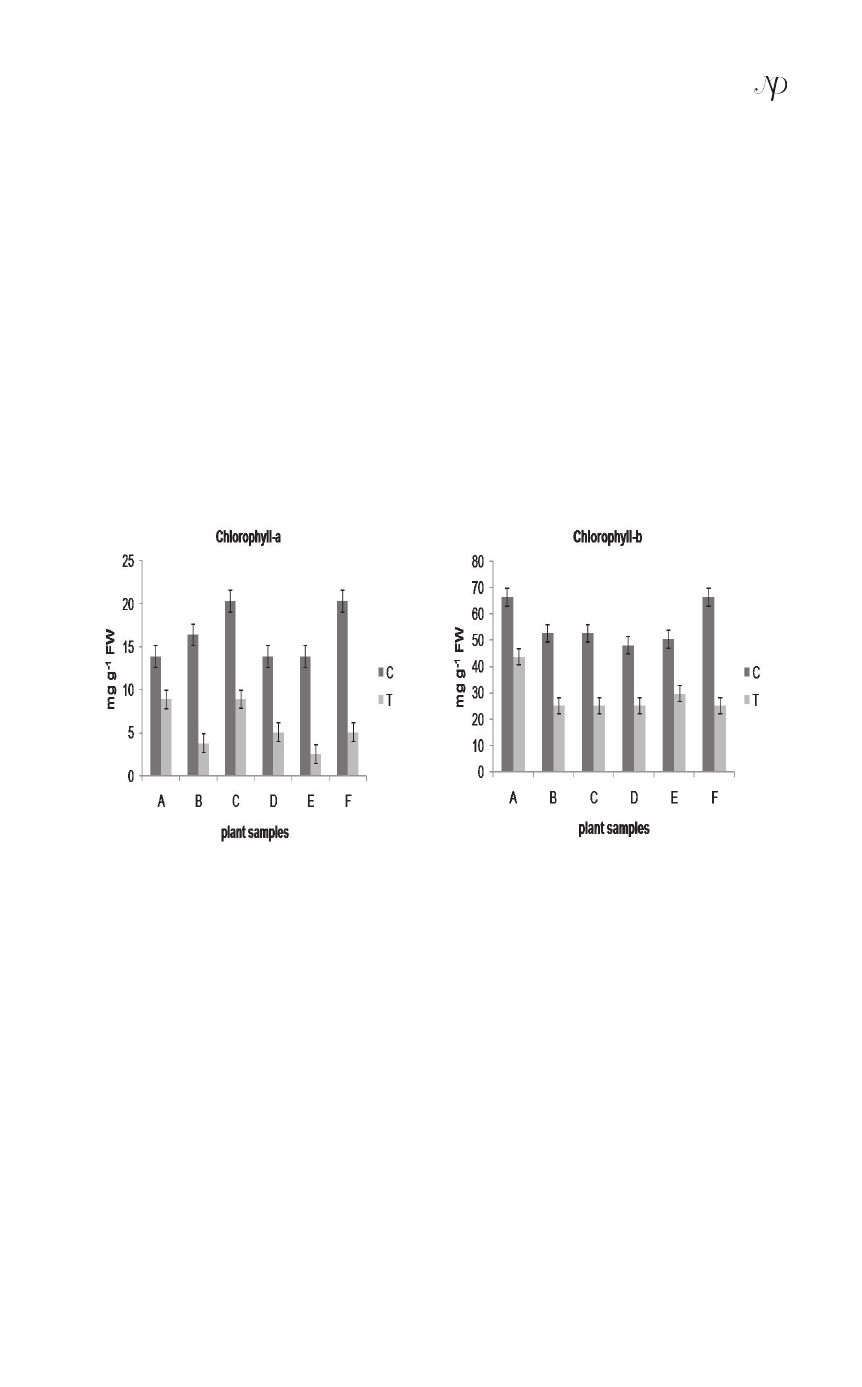
fig. 1 and 2: Effects of Pb concentration on chlorophyll a ,chlorophyll b content
Effect of Pb on Catalase activity
The Catalase increased from 63% to 19% compared to controls in all plants.
Highest enhancement was observed in Calotropis procera (63%) and lowest in
Bromus tectorum (19%) followed by Anisomilius molabarica (0.47%), Ipomea
purpurea (0.37%), Eichornia fasculata (0.35%) and Parthenium histocarpus
(0.25%) (Fig. 4). Elevated Catalase would lower H 2 O 2 levels, which reduces the
lipid peroxidation degree and lessen membrane damage by converting H 2 O 2 into
water and oxygen. Our results of increasing concentration of catalase activity with
the increasing concentration of Pb corroborate with the findings of Verma and
Dubey (2003) in rice plants and Pinus radiate plants (Jarvis and Leung, 2002).
Int. J. Bioinformatics and Biological Sci.: v.2 n.1&2, p. 13-22. March & June 2014
17