Lead stress-induced changes of antioxidant
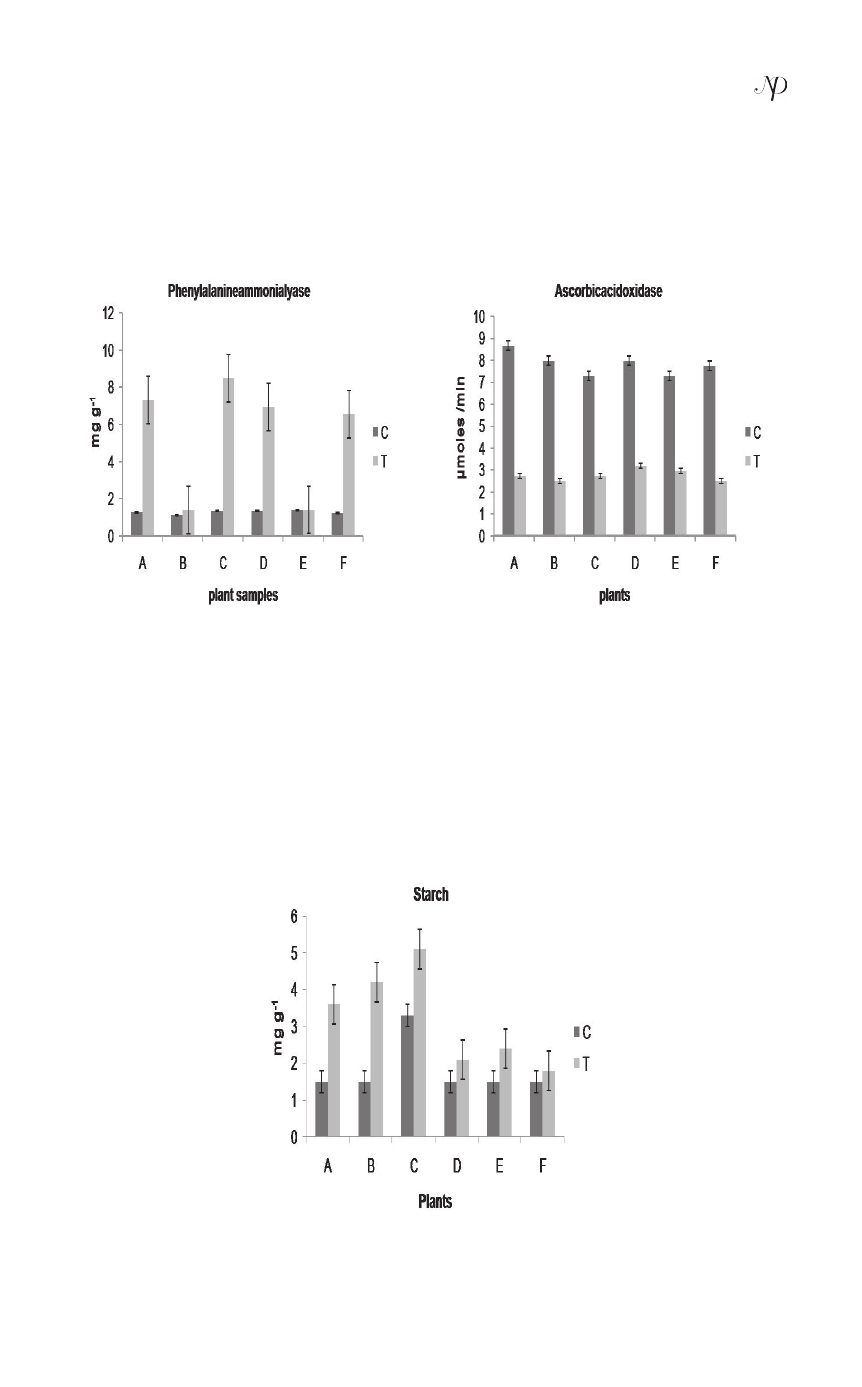
controls. Calotropis procera and Ipomea purpurea showed highest decrease in
ascorbicacidoxidase activity by 68% and lowest is seen in Parthenium histocarpus
(6%) followed by Anisomilius molabarica (67%) , Eichornia fasculata (63%)
and Bromus tectorum (59%).compared with controls (Fig. 6). Our results accord
with previous researches under Pb stress in ascorbicacidoxidase from findings of
fig. 5 and 6: Effects of Pb concentration on
ascorbic acid oxidase activity and lipid peroxidation levels
Anuradha et al., (2007) in radish, Ibrahim et al., (2013) in alfalfa under cobalt and
copper toxicity and cucumber plants due to arsenate toxicity according to Czech
et al., (2008). Ascorbicacidoxidase seems more important due to its role in plants
not only as an antioxidant, but also as a signal molecule in many developmental
and defense responses.
fig. 7: Effects of Pb concentration on Starch content
Int. J. Bioinformatics and Biological Sci.: v.2 n.1&2, p. 13-22. March & June 2014
19