Prajapati et al.
Gabriel, Tugwell, O’Brien, Yelin, Drummond, Ruff, 1999).
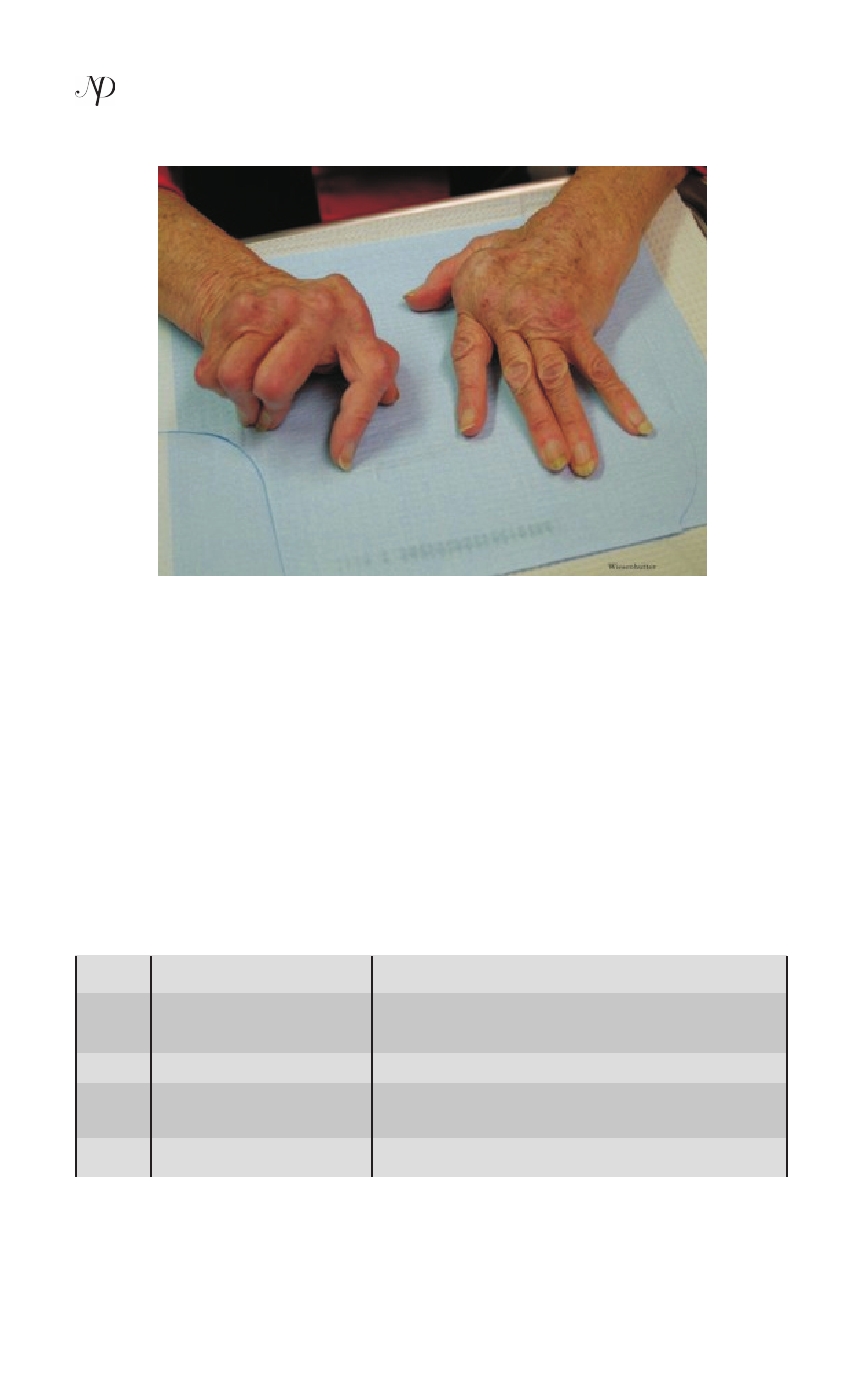
fig. N. 1- Hand deformity of rheumatoid arthritis
The economic evaluation is to identify, measure, value and compare the cost
and consequences of the alternatives being considered. The economic evaluation
methods include cost-of-illness evaluation, cost-minimization, cost-benefit, cost-
effectiveness, and cost-utility analyses. Each method, except cost-of –illness
evaluation, is used to compare competing programs or treatment alternatives. The
method are all similar in the way they measure cost (dollar/rupees) and different
in their measurement of outcomes. Cost effectiveness analysis is therefore used
in health economics to compare the financial cost of therapies whose outcome
can be measured purely in terms of health effect. The common costs involved in
economic outcomes are the following (Wong et al., 2001).
table 1. common cost involved in economic outcomes.
Sr. No.
cost –category
cost
Drug, Supplies, Laboratory tests, Health care
1.
Direct medical cost
professional’s time, Hospitalization
2.
Indirect non-medical cost Transportation, Food, Family care, Home aids
Lost wages [morbidity], Income forgone due to
3.
Direct non-medical cost
death
4.
Intangible cost
Pain, Suffering, Grief
Direct cost: Direct costs are those directly associated with detection, treatment,
and prevention of disease (Eisenberg, 1989). These costs may be disease specific,
a direct result of the condition, or disease associated, a consequence of the
86
Int. J. Bioinformatics and Biological Sci.: v.2 n.1&2, p. 85-94. March & June 2014