Development of a solid-state fermentation process for production of bacterial
10.
Wheat bran
102.33
119.48
150.54
154.17
11.
Potato peel
116.14
128.36
142.78
119.82
12.
Sweet potato peel
127.63
140.33
149.77
138.16
13.
Banana peel
115.39
147.28
152.47
133.26
14.
Sugarcane baggase
109.42
135.75
148.73
142.38
15.
Soybean husk
108.23
113.84
125.94
107.96
Substrate: F(cal) = 31.40 > F (tab) = 1.93 (S) at 5%
Extraction medium : F(cal) = 6.92 > F (tab) = 2.82 (S) at 5%
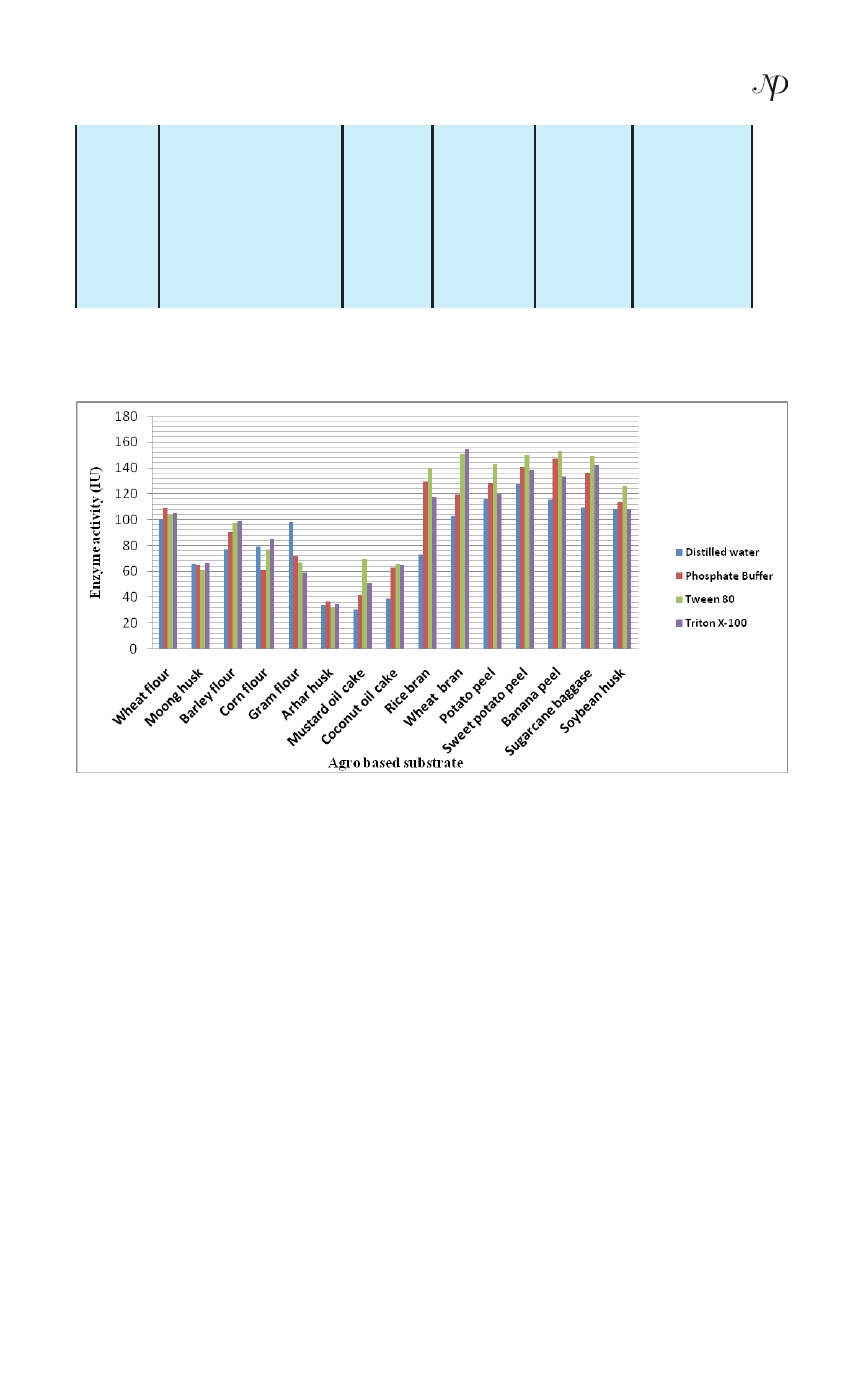
Figure 1: Production variation of α- amylase by Bacillus licheniformis from different
agrobased substrates under SSF
In industries there is an essential need for an economical and simple indigenous
system for producing high titers of alpha amylases. One alternative low cost and
feasible production method is the use of SSF. However, there are several factors,
which affect SSF processes. Among these, selection of a suitable strain, substrate
and selection of process parameters are crucial (Pandey et al., 2000). In the present
investigation, SSF was applied for the production of alpha amylase by using
Bacillus licheniformis . This study revealed high levels of α-amylase production
with Bacillus licheniformis on sugarcane baggase and wheat bran as the solid
substrates. In the present investigation wheat bran was found to be best for the
production of α- amylase. The productivity levels of α- amylase from wheat bran
were found to be high in other published reports of Babu and Satyanarayana
(1995); Mamo and Gressesse (1999); Ramdas et al. (1996); Ramesh and Lonsane
(1987).The suitability of a particular substrate in a SSF process for the production
of α-amylase appears to be governed by the physicochemical requirements of
International Journal of Bioinformatics and Biological Sciences : v.2 n.3&4. Dec. 2014
207