Singh et al.
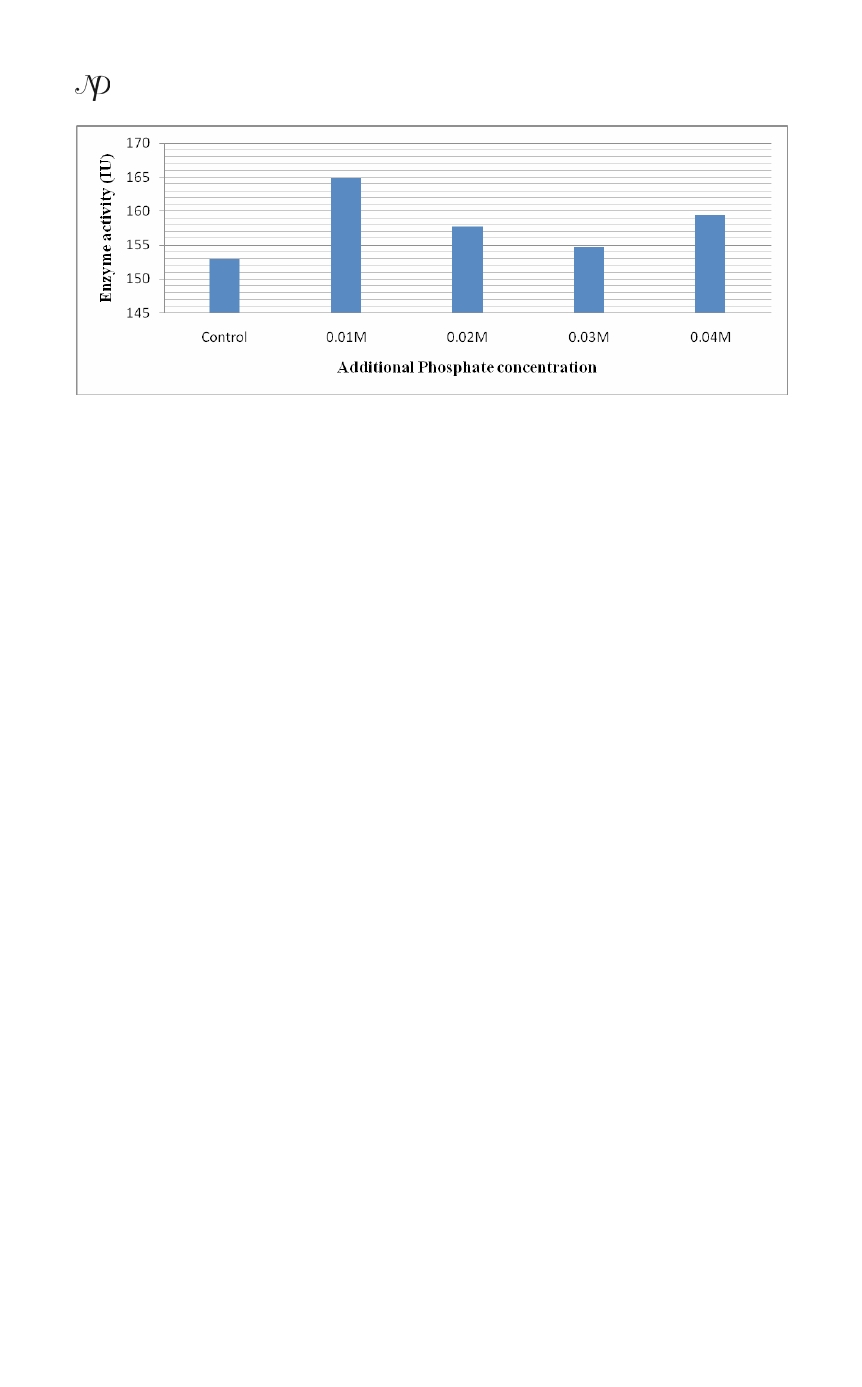
Figure 10. Variation in alpha amylase production by Bacillus licheniformis due to
varying concentration of Phosphate supplementation
Statistical Analysis
The obtained data were analyzed using ANOVA and Correlation.
Conclusion
Commercially most of the production of α – amylase is carried out in submerged
fermentation but solid – state fermentation can be looked as a potential tool for
its production, especially applying agro industrial residues as substrate. Based
on the Results of this investigation, it can be concluded that wheat bran has
higher efficiency in α-amylase production among the agroresidues using Bacillus
licheniformis.
Acknowledgements
The authors acknowledge Department of Microbiology and Fermentation
Technology, Sam Higginbottom Institute of Agriculture, Technology & Sciences
(Deemed to be University) for providing facilities to conduct research work.
References
Aiyer P.V.D. 2004. Effect of C:N ratio on alpha amylase production by Bacillus
licheniformis SPT27. African journal of Biotechnology. 3(10): 519-522.
Alva S.,Anupama J., SavlaY.Y., Chiu P., Vyashali. Shruti M.,Yogeetha B.S.,Bavya D.,Purvi
J., Ruchi B.S., Kumudini B.S., Varalakshmi K.N. 2007. Production and characterization
of fungal amylase isolated from Aspergillus sp. in solidstate culture. Afr. J. Biotechnol.
6(5): 576-581
Anto Hema., Trivedi Ujjval and Patel Kamlesh (2006). Alpha Amylase Production by
Bacillus cereus MTCC 1305 Using Solid-State Fermentation. Food Technol. Biotechnol.
222
International Journal of Bioinformatics and Biological Sciences : v.2 n.3&4. Dec. 2014