
Sale!
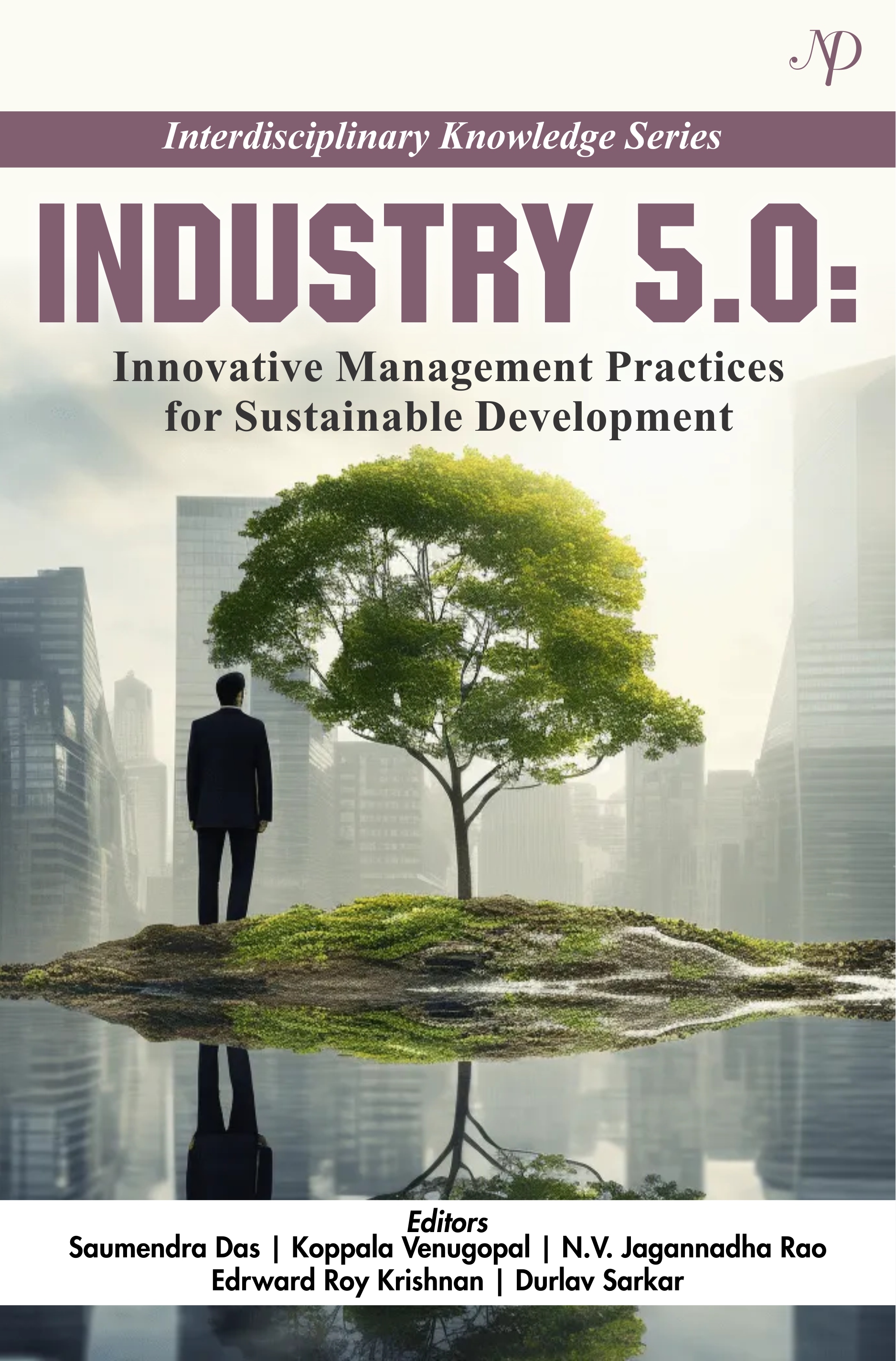
Industry 5.0: Innovative Management Practices for Sustainable Development
ISBN NO:9788169480246 PAGES :391 PAPER TYPE: HardboundAuthor(s) / Editor(s):
Saumendra Das, KoppalaVenugopal, N.V. Jagannadha Rao, Edrward Roy Krishnan and Durlav Sarkar
Industry 5.0 represents a transformative paradigm in the evolution of industrial systems, emphasizing the harmonious collaboration between humans and advanced technologies. Moving beyond Industry 4.0 which primarily focused on automation, digitalization, and efficiency whereas Industry 5.0 places human well-being, creativity, and sustainability at the center of technological advancement. This shift highlights a more balanced approach where technological progress is aligned with societal values and environmental responsibility.The defining features of Industry 5.0 include a human-centric approach, sustainability, resilience, and the integration of advanced technologies such as artificial intelligence, the Internet of Things (IoT), blockchain, and big data. These elements collectively aim to create systems that are not only intelligent and efficient but also adaptive, inclusive, and environmentally conscious. In this context, management practices must evolve to facilitate meaningful human machine collaboration while ensuring ethical and responsible innovation. A critical aspect of this transition is the transformation of workforce capabilities. Industry 5.0 emphasizes continuous upskilling and reskilling to prepare employees for collaborative roles alongside intelligent systems. It also underscores the importance of trust, safety, and transparency in human–machine interactions. Developing robust frameworks that ensure reliability, accountability, and ethical governance is essential to fostering confidence in these emerging systems.